Colorado State Researchers Bring Decades of Rangeland Science to UN Land Summit in Mongolia
Banner image: The Mongolian steppe. Image: Wikimedia Commons (CC0, public domain)
At UNCCD COP17, CSU scientists will connect a research legacy that changed rangeland policy with current work on resilience, community knowledge, and pastoralist women’s leadership.
FORT COLLINS, Colo. When Maria Fernández-Giménez first traveled to Mongolia in 1994, she was a doctoral student testing a theory advanced by scientists at Colorado State University (CSU).
More than three decades later, she is returning to Ulaanbaatar for a United Nations summit where Mongolian researchers and institutions are building on concepts, tools, and partnerships that emerged from decades of international rangeland research.
She travels with Dennis Ojima, senior research scientist and interim director of the Natural Resource Ecology Laboratory (NREL). Together, they will represent CSU at the 17th Conference of the Parties (COP17) to the United Nations Convention to Combat Desertification (UNCCD), held Aug. 17-28 in Ulaanbaatar under the theme Restoring Land. Restoring Hope.
Fernández-Giménez, a senior research scientist in the Department of Forest and Rangeland Stewardship and a retired professor of rangeland ecology and management, studies the social and ecological ties that sustain pastoral communities worldwide, particularly the undervalued role women play in their continuity and resilience.
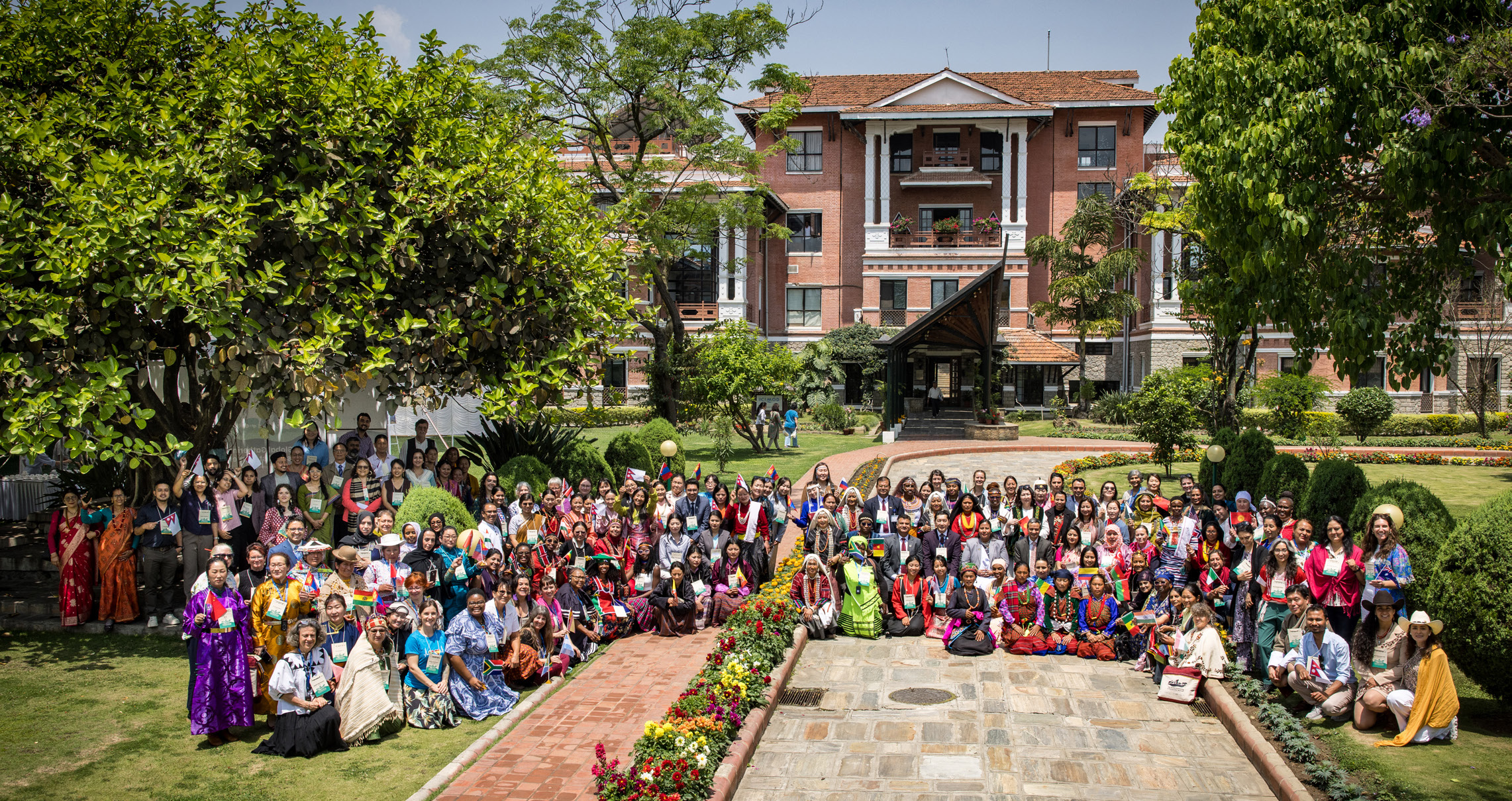
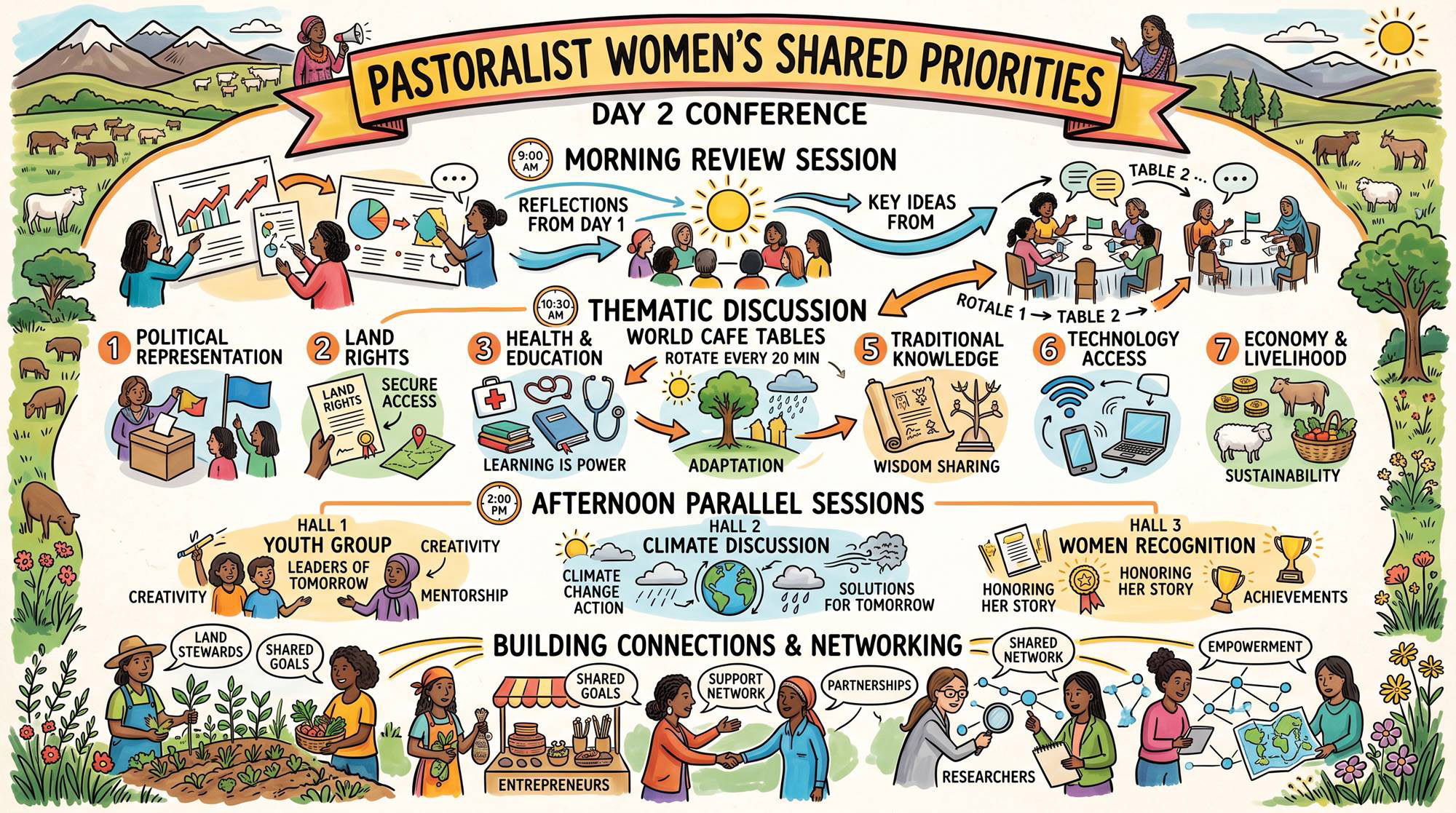
She helped organize the Global Gathering of Pastoralist Women, held May 26-29 in Kathmandu, Nepal. More than 100 participants from more than 40 countries took part; the gathering established a global network, drafted the Kathmandu Declaration, and developed a strategy to carry pastoralist women’s priorities into global policy spaces, including COP17. Two Warner College-affiliated groups also helped support the gathering: the Center for Collaborative Conservation, and the Mountain Sentinels Collaborative Network, led by CSU’s Julia Klein.
Watch: pastoralist women describe their priorities in their own words (Facebook).
The UNCCD is the global land treaty with 197 Parties, adopted in 1994 after the 1992 Earth Summit in Rio de Janeiro. Land degradation now affects up to 40 percent of the world’s land.
Where land fails, livelihoods and communities often suffer with it, which is why the treaty treats the subject as a matter of security and displacement – an interdisciplinary project – rather than ecology alone.
Ojima thinks that an interdisciplinary approach is part of what makes CSU special. “We bring the social science, the physical science, and the ecological sciences together,” he said.
Researchers at CSU have long worked in teams that join those disciplines and engage local practitioners directly, he said, and they continue to work with communities internationally to pursue strategies for dealing with change. That interdisciplinary way of working started decades ago, and the university continues to foster it.
The conference falls during the International Year of Rangelands and Pastoralists, a United Nations designation Mongolia championed. Rangelands are the grasslands, savannas, and shrublands too dry or rugged to cultivate, and they cover close to half the Earth's land surface.
The herders who use them, known as pastoralists, move livestock across those landscapes to follow seasonal grass and water.
85 Years of Rangeland Science
CSU’s formal range-management lineage reaches back at least to 1941, when its Division of Forestry and Range Conservation included a Department of Range and Pasture Management. The university established a School of Forestry and Range Management in 1951, which became the College of Forestry and Range Management in 1957. In 2026, that marks 85 years of formal range-management instruction at CSU.
NREL was founded at CSU in 1967 under George M. Van Dyne as the university prepared to lead grassland ecosystem research for the U.S. International Biological Program, an effort supported by the National Science Foundation to understand whole ecosystems rather than single species.
The work that changed the field internationally began in the 1980s. A dominant management paradigm treated livestock pressure as the primary driver of rangeland degradation and often cast pastoralists themselves as the problem.
“In the 1980s, we pretty much all thought that livestock and pastoralists degraded rangelands, because we believed that rangelands were equilibrium systems,” said Robin Reid, professor emerita of ecosystem science and sustainability, who began her doctoral research at NREL in 1987 in Turkana, northern Kenya. In an equilibrium system, she explained, “once you graze something, it has a feedback and degrades it.”
“Jim Ellis’s work showed that many rangelands in the world do not have that connection,” Reid said. “And therefore it’s harder for livestock to degrade systems.”
James Ellis and David Swift, both at NREL, published the argument in 1988 in the Journal of Range Management after nine years of ecosystem research in northern Kenya. In the driest rangelands, they found swings in rainfall from one year to the next drive far more change than the number of animals grazing.
Such systems are non-equilibrial but persistent: as Reid put it, “there isn’t this feedback between use and degradation.” The finding split the field, with social scientists seizing on the idea that livestock do not degrade the environment and environmental scientists on the idea that livestock nearly always do. Reid’s own reading is that the whole spectrum is true, depending on rainfall: dry areas are less able to be degraded, wet areas more likely to be. She calls the policy shift that followed the most important part, and among the biggest effects CSU has had.
“It caused us to stop talking about pastoralists as a problem, and instead engage them as part of the solution from a policy perspective,” she said.
Across Africa and Asia, development policy had often promoted lower stocking rates and the settlement of mobile herders. Ellis and Swift’s work strengthened a different approach in highly variable drylands: policies should recognize climate variability and facilitate, rather than constrain, pastoral strategies such as moving animals to follow shifting grass and water.
Behind the finding was a diverse combination of people. Ecologists and anthropologists at CSU were treating the land and the communities on it as one system, long before that became normal.
“We were studying social ecological systems and climate change before they were ever part of the scientific vocabulary,” said Kathleen Galvin, a professor in CSU’s Department of Anthropology and Geography and a senior research scientist at NREL, where she has been affiliated since she was a student.
Ecologists and social scientistsat NREL are trained to understand those linked systems, she said, and “there are very few places that actually bring the two together.”
Galvin has spent her career among pastoral communities in East Africa, studying how families absorb long dry seasons, how policy shapes their ability to move, and how a changing climate affects their ability to earn a living. She founded CSU’s Africa Center in 2014 to strengthen collaborative research and engagement with African partners and earlier helped establish with Robin Reid’s CSU’s key strategic partnership with the University of Nairobi in 2012.
Galvin takes pride in how the Africa Center brings together and celebrates Africa-focused work from across the university.
One early case typical of CSU scientists was the Ngorongoro Conservation Area in northern Tanzania, a multiple-use landscape where Maasai pastoralists, farmers, and some of Africa’s best-known wildlife share the same ground. The question was whether people could grow crops there without harming wildlife. The team adapted the SAVANNA model to the area, mapped cultivation from satellite imagery, ran the scenarios, and advised officials writing the policy.
Asking policymakers and communities what they needed to know, then building the model to answer it, became a habit at CSU. For example, Galvin and colleagues brought US, Mongolian and Kenyan researchers and practitioners together in a workshop at CSU to co-design a project determined by the participants at the workshop. The workshop developed common ground and co-designed research for the rangeland social-ecological systems in all three countries.
Ojima emphasized that the entire university is part of this work and has helped take it to a global scale. “We helped move beyond the western United States to the rest of the world.”
Decades in Mongolia
Fernández-Giménez based her doctoral research at the University of California, Berkeley, on Ellis and Swift’s ideas, then traveled to Mongolia in 1994 and 1995 to test them in the field, which she describes as the first attempt to do so. She joined CSU in 2003, drawn by its reputation in rangeland ecology and its international reach.
The collaboration that followed grew into a National Science Foundation project running from roughly 2008 to 2015. It opened with a week-long meeting in Ulaanbaatar that put about 100 people in one room: herders, government officials, conservation and development organizations, and Mongolian, American, and international scientists. Rather than arrive with a research design, the scientists built one with everyone present, settling the problem, priorities, questions, and methods together.
“It wasn’t perfect, but we accomplished a lot,” she said.
Researchers call this transdisciplinary work. Fernández-Giménez put it more plainly. “Research isn’t just what’s done by scientists with PhDs and universities, but it’s done in collaboration with local people who hold indigenous and traditional and local knowledge, and that they are equal partners in the research process.”
One lasting result was a shared vocabulary. “Our work and CSU’s work in Mongolia really brought that vocabulary and that scientific understanding of the concept of rangeland resilience to Mongolia,” Fernández-Giménez said. That concept now underpins Mongolia’s national rangeland assessment and monitoring program, which reports on conditions across the country each year.
The people are part of the legacy too. “The students that we trained from Mongolia who got their PhDs at CSU in rangeland ecosystem science are the leaders now in Mongolia in this kind of work,” she said. “Some of them are leading international organizations.”
One of those CSU-trained researchers, Tungalag Ulambayar, now serves on the convention’s Science-Policy Interface, its scientific advisory body. Fernández-Giménez said Ulambayar organized the COP17 session where she will give the keynote.
She traces this year’s International Year of Rangelands and Pastoralists to the same collaboration. “You can see a direct line from that project to the people and the organizers, and even the fact that there is an International Year of Rangelands and Pastoralists,” she said. Many of the Mongolians behind it, she notes, worked on that project.
Mongolia has recognized the work directly, naming Fernández-Giménez an Honorable Champion of Agriculture and Food Industry in 2014 and awarding her the Order of the Polar Star in 2016 for decades of research, education and capacity-building connected to the country’s rangelands and pastoral communities.
Ojima's connection to the region runs in parallel, through research and training in Mongolia, China and Central Asia, as well as in Senegal and Ethiopia. He has been recognized for his international contributions in the Millennium Ecosystem Assessment, receiving the 2005 Zayed International Prize for the Environment and the International Panel on Climate Change 2007 Nobel Peace Prize. In 2013, he was honored as a Champion of the Environment by the Mongolian Minister of the Environment and Green Development.
Ojima began working in Mongolia in 1993 and was part of the CSU group that engaged with the UNCCD in the early 2000s.
Concern about Mongolia’s pastoral systems has risen steadily since, he said, as climate change and a wholesale shift in the country’s economy reshape the pressures herders face. In the early 1990s, few researchers worked in Mongolia. That has changed, and over the past decade interest has grown in the natural resource contributions the country can make to its region. Mongolia has considerable capacity for solar energy, Ojima noted, which is drawing more serious attention as solar technology and energy storage advance.
What Resilience Means
Resilience runs through the COP17 agenda. Reid defines it simply.
“The simple way to define it is the ability to bounce back when something bad happens,” she said.
For a herding family, that can mean drought or, in the north, an extreme cold snap. Recovery depends on a few concrete conditions. The first is each other. “They have the best built safety nets I’ve ever seen in the world,” Reid said of the kinship ties and community agreements herders use to spread losses.
The second is the ability to move animals to grass and water, either across common land where herders follow the rain or through negotiated access where land is fenced and privately held. The third, which Reid returns to repeatedly and says gets the least attention, is access to markets.
That room to move is shrinking. Galvin describes East African rangelandsas fragmented into smaller parcels by more frequent droughts, settlements, towns, mining, and newly established conservation areas. Herders once absorbed bad years by keeping camels, cattle, sheep, goats, and donkeys together, since each animal copes differently, and by migrating with their livestock.
“The openness of the rangelands has decreased a lot through time,” Galvin said, “for numerous reasons. It’s not just climate change, it’s not just policy, but it’s a combination of these and many different things including human population growth.”
Reid recalls Ellis estimating in the early 1990s that it takes about 25 years for a scientific finding to reach policy, and says he spent the rest of his career trying to shorten that gap. His method was to build the sort of partnerships universities rarely reward. Reid describes two things scientists can do: supply information no one else collects and change who gets to ask the questions.
“The people that actually live on the land are rarely listened to,” she said, “but they’re the ones that actually know what they need.” Asked what makes rangelands and their communities resilient, her first answer was blunt: go talk to pastoralists.
Galvin describes the same shift. “We can work with pastoral groups and pastoral leaders and ask them what their problems are, rather than going in with a certain set of questions that we want to answer,” she said. “If you can combine that with trying to solve problems that are important to local people, it’s a win-win.” Galvin gave an example: plants are spreading across parts of East Africa that neither livestock nor wildlife will eat, and where they take hold determines where a family can graze. It’s important for the environment and the people to address these issues, something CSU does through developing models.
“It’s like weather forecasting, except doing it with something even more complicated, which is ecosystems,” Reid said of CSU’s models. “Policymakers don’t have a clue what’s going to happen next, and we can use our models to help them see the future.”
She adds two more roles. One is convening, getting scientists, officials, and community members into the same room to work out what findings mean, which she says is still rare. The other is training scientists who come from herding communities themselves. “Not all those people become scientists; they become policymakers,” she said, and either way they play an important role.
Fernández-Giménez pointed to practical tools as another form of impact. She helped develop state-and-transition models, which work as field guides to a piece of land: they set out the conditions that land can be in and what moves it from one state to another, so a rancher or agency staff member can locate their own ground and decide what to do.
She built them with local knowledge holders, agency staff, and people without formal scientific training at the table. The U.S. Department of Agriculture’s Natural Resources Conservation Service and other land-management agencies have adopted state-and-transition models as standard tools for ecological sites, and Fernández-Giménez co-authored practical guidance for their development with agency scientists. Colleagues later introduced participatory state-and-transition modeling to Mongolia, where resilience-based ecological site descriptions and models became part of the national rangeland assessment and monitoring system.
“As researchers, we’re not only doing the science in the sense of answering the big questions with empirical data, which absolutely is what we do,” Fernández-Giménez said. “We’re also creating practical tools that ordinary people can use.” Those people help design the tools, she added, which is how the tools end up working in the field.
Reid reckoned with the obligations that come with this kind of research. Communities are vulnerable to outsiders who arrive and make promises. “You must make sure you keep your promises,” she said. “And you have to keep showing up.”
A researcher who visits once, collects interviews, and never returns leaves the community with nothing and makes the next researcher’s job harder. When Reid’s teams began returning to report what they had found, the reaction showed how rare that was. Communities told them it was the first time anyone had asked what they wanted to know before starting and the first time anyone had returned to explain the results.
Carrying a Legacy Forward
The argument James Ellis and David Swift published in 1988 concerned rainfall and grazing in northern Kenya, but it had policy consequences: it helped shift development thinking away from treating pastoralists and stocking rates as the default explanation for degradation and toward policies that recognize climate variability, mobility, and pastoral strategies. Nearly four decades later, that perspective is central to the rangeland discussions converging in Ulaanbaatar.
What CSU built alongside the finding has proved just as durable. By asking officials and communities what they needed to know, then building or adapting models to answer those questions, researchers produced tools that outlasted individual grants.
COP17 is a venue for exactly that kind of exchange. For Ojima, the conference is about “developing a greater international partnership to provide solutions to these important pastoral communities, and to protect these fragile rangelands across the world.” He said much of the university’s contribution is behind the scenes: offering assistance and insight to communities and doing background work behind the status reports that shape the convention’s agenda, where CSU colleagues have been influential in developing materials.
He also points to the role universities and nonprofits play, beyond government collaboration. A great deal of activity in the United States supports the initiatives of the UNCCD, he said. “NGOs and universities, through their participation in conferences, through soft diplomacy, assure the international community that we are invested in these issues.”
CSU’s rangeland work today reaches from Colorado to southern Africa and across the College of Agricultural Sciences, College of Liberal Arts, Warner College of Natural Resources, and CSU Extension. It spans grazing and soil health, ranch economics, virtual fencing and modeling, satellite monitoring, drought planning, and community-based citizen science with Maasai partners in Tanzania.
The work spotlighted below celebrates initiatives from across CSU, and in the spirit of this article, we organized around UNCCD-COP17 working agenda priorities: the Rangelands Flagship Initiative, Water-Land Nexus Initiative, and Nature-Based Solutions for Sustainable Infrastructure Initiative.
CSU’s Rangeland and Dryland Work Today
Organized around Mongolia’s three Steppe Action Agenda initiatives.
Rangelands Flagship Initiative
Across CSU, sustainable rangeland management links soil health, economics, and producer-led research. The 3M (Metrics, Management, and Monitoring) Project is a multi-institutional study of how grazing management affects soil health, ecosystem function, and ranch resilience across U.S. grazing lands. At CSU, the Soil Innovation Lab leads the project’s soil health research, including work by Paige L. Stanley. Through AgNext Grazing Systems and Rangeland Management, John Ritten studies the economic and social dimensions of grazing, including adaptive grazing and stocking strategies, virtual fencing and precision livestock technologies, and tradeoffs associated with conservation programs and environmental markets. The Western Ranch Management and Ecosystem Stewardship Program works with ranch owners, managers, and stakeholders to identify research and education needs in the Rocky Mountain West, using working ranches as settings for hands-on learning and applied research.
CSU researchers are also developing decision-support and monitoring tools for rangelands. Randy Boone and Spencer Burkhart are applying evolutionary computation to grazing planning through the Evolutionary Optimization Algorithm for Adaptive Livestock Grazing Management Using Virtual Fencing, which generates and compares grazing plans for forage quantity and quality and is designed to work with virtual fencing. Boone also maintains the L-Range model family, used to study animal mobility, drought response, carbon dynamics, and other rangeland processes; Af-Range is a newer member of that family. The Vogeler Lab combines satellite imagery, airborne and spaceborne lidar, historical imagery, and field measurements to study ecosystem change and build decision-support tools with land managers. Its dryland work includes woody vegetation, bush encroachment, elephant impacts, fire, and drought in southern Africa’s Greater Kruger region, along with pinyon-juniper and eastern red cedar dynamics across the Great Basin and Great Plains.
Long-running international work provides another example. Mongolian Plateau research by CSU researchers in Mongolia and China has examined the vulnerability and resilience of pastoral social-ecological systems as climate, land use, markets, ecosystem services, and access to resources change. Rangeland research also intersects with renewable energy through CSU’s Agrivoltaics Innovation program, where Keith Paustian is examining how solar panels over grazed pasture affect forage productivity and ecosystem carbon and nitrogen cycling, including greenhouse gas emissions and soil carbon balance. Carrie Havrilla, an assistant professor of rangeland ecology and management, leads research on restoring degraded rangelands and is now extending that work into ecovoltaics, studying how solar arrays can be designed and managed to support plant and soil restoration in dryland ecosystems while maintaining solar productivity. Paul Evangelista, a CSU research ecologist, co-founded The Murulle Foundation, a Fort Collins-based nonprofit that supports participatory grassroots projects in sub-Saharan Africa combining scientific research, conservation, education, training, and social initiatives.
Water-Land Nexus Initiative
Work at the water-land intersection ranges from operational monitoring to social-ecological modeling and on-the-ground drought planning. The FEWS NET Water Point Viewer, to which Gabriel Senay has contributed, uses satellite and hydrologic modeling to monitor water stress at small ponds across pastoral areas of the Sahel and East Africa; current research describes the operational system as applying its water-balance model to 338 ponds. In Drought frequency, conservancies, and pastoral household well-being, Randy Boone, Carolyn Lesorogol, and Kathleen Galvin used a coupled social-ecological simulation to examine how increasing drought frequency and constraints on access to grazing land could affect livestock numbers and household well-being in Samburu County, Kenya.
In Colorado, Colorado Drought Advisors, led by CSU Extension and founded by Extension, agricultural trade groups and other state-wide organizations, works with agricultural producers to identify vulnerabilities and build operation-specific drought plans through workshops, trainings, and individualized advising. Wildfire is another concern that impacts rangelands and ranchers. At the urging of community members impacted by 2025 wildfires, and with the support of the Mesa County and Rio Blanco County commissioners, Retta Bruegger and Anthony Vorster submitted a proposal to study post-fire recovery and grazing on Colorado’s western slope. At the time of writing, the proposal is still under consideration. Separately, the Western Ranch Management research program publicly identifies wildfire and post-fire vegetation recovery among the challenges and applied research areas it addresses.
Nature-Based Solutions for Sustainable Infrastructure Initiative
CSU work aligned with this theme emphasizes participatory research, knowledge co-production, and practical decision support. As mentioned earlier in this article, Fernández-Giménez and collaborators have helped develop and apply state-and-transition models, which describe alternative ecological states and the processes that move rangelands between them; participatory approaches to these models have been used in the United States and Mongolia. Cattle as Partners in Conservation, led by Stacy Lynn with graduate researcher Anna Clare Monlezun, studied public-land grazing through field comparisons of grazed and ungrazed sites, research on stakeholder priorities, and participatory modeling. That work includes the ECo-Range agent-based model, which represents interacting human, animal, forage, and environmental dynamics in grazing systems.
In northern Tanzania, the Problematic Plants project was co-created with Maasai community partners to identify, locate, and monitor plants that local participants identified as causing problems for people, livestock, or the environment. Community members helped define the plant categories and were trained to record geolocated observations using a mobile app and a Swahili-language data sheet. CSU also connects rangeland science with education through the Wild Horse and Burro K-12 Teaching Resources, an open-access collection covering western rangeland ecology and the history, biology, behavior, and management of wild horses and burros. The project team also analyzed online narratives and misinformation to inform the curriculum.
Pastoralist knowledge and leadership are also central to the Global Gathering of Pastoralist Women, held in Kathmandu in May 2026 and co-organized with Fernández-Giménez. The gathering brought together pastoralist women from around the world for knowledge sharing, network-building, and advocacy and produced the Kathmandu Declaration as a shared agenda and call to action.
About the Natural Resource Ecology Laboratory. Founded at Colorado State University in 1967, the Natural Resource Ecology Laboratory studies grassland, rangeland and dryland ecosystems in Colorado and the western United States, and through long-standing programs in Africa, Asia, Australia, Europe, and South America.
About Colorado State University. Colorado State University is Colorado’s land-grant research university, founded in 1870 in Fort Collins at the foothills of the Rocky Mountains. A Carnegie R1 institution, CSU enrolls more than 34,000 students and carries out research, teaching, and outreach across eight colleges, with a longstanding focus on agriculture, natural resources, and environmental science.
Media Contact
Caroline Nickerson, Communications Specialist, Natural Resource Ecology Laboratory, Colorado State University